Key Terms and Main Ideas
- We reflect upon ourselves and our lives using digital technology.
- Using technology to see one’s self distorts one’s own self image.
- ‘Self-representation’ has been a common part of culture throughout history.
- There are three distinct forms of self-representation in digital media: visual, written, and quantitative.
- Self-representation in digital media evolved from text to images to videos to real-life tracking.
- The turn from text to images was one of the greatest technological innovations.
- Autobiographical writing has only become commonplace relatively recently.
- Western diary writing “began with spiritual and religious self-examination”.
- Access to education and technology has spurred autobiographical writing into normalcy.
- Diaries and autobiographies evolved into blogs.
- Nikki bungaku (日記文学): A Japanese tradition of recording daily events, sometimes in poetic form, in diaries.
- Topic-driven blogs are sometimes unlike diaries in that they do not record personal experiences, but still represent the thoughts and feelings of the creator, even if the blog is anonymous.
- In art history, self portraits went from a full representation to a fragmentary view.
- We records ourselves with numbers as well as with words. The recording of oneself with numbers is called ‘quantitative self-representation;.
- The ease of photographing oneself with a cellular device turns to the ease of controlling our self-representation.
- Digital self-representation is that of a controlled audience, public or private.
- Social media is both about communication and self representation.
- As images prevailed on social media, users began showing their bodies more.
- An equal viewing and sharing amount became important for one to be accepted in internet culture.
- Misogyny plays a large role in response to selfies and like photos of women posted online.
- Social media gives many an opportunity to speak to a large audience without criticism.
- What has fallen to the back of cultural consciousness is the conversational aspect of social media.
Summary
In 2014, author and scholar Professor Jill Walker Rettberg published her book Seeing Ourselves Through Technology: How We Use Selfies, Blogs and Wearable Devices to See and Shape Ourselves. The book examines how many use digital media in modern society to represent themselves. In the first chapter of the book, “Written, Visual and Quantitative Self Representation”, Rettberg examines what she determines the three main modes of self-representation: written, visual, and quantitative. Written self-representation began in diaries and autobiographies, which became more commonplace as access to education and technology expanded in different cultures. From the diary came blogs and other textual forms of self-representation. Visual self-representation comes in the form of images of oneself, from the earliest self portraits to the modern selfie. Quantitative self-representation is that of representation in numbers, and has been common throughout history; agricultural records, birth and death records, weight and height records, and step trackers are all forms of quantitative self-representation. The three forms of self-representation are ingrained in many cultures; it is a misconception that they are recent side effects of social media.
Making Connections
For many artists, their best pieces are those of self images. Frida Kahlo, who painted mostly self portraits, once said “Me pinto a mí misma, porque soy a quien mejor conozco.” In English, this means “I paint myself because that’s who I know best.”

I Know Why the Caged Bird Sings by Maya Angelou is a form of self image, as is Diary of a Young Girl by Anne Frank. I Am Malala by Malala Yousafzai changed the world just as Malala did, as did Night by Elie Wiesel.
In her book Seeing Ourselves Through Technology: How We Use Selfies, Blogs, and Wearable Devices to See and Shape Ourselves, Professor Jill Walker Rettberg categorizes self-representation into three types: written, visual, and quantitative.
Written self-representation may be the most common form of self-representation in a historical perspective, from ancient manuscripts on papyrus and stone to a password-protected diary app on a smartphone. Benjamin Franklin, Mahatma Ghandi, Hellen Keller, Nelson Mandela, Michelle Obama, and Oprah Winfrey have all written autobiographies.
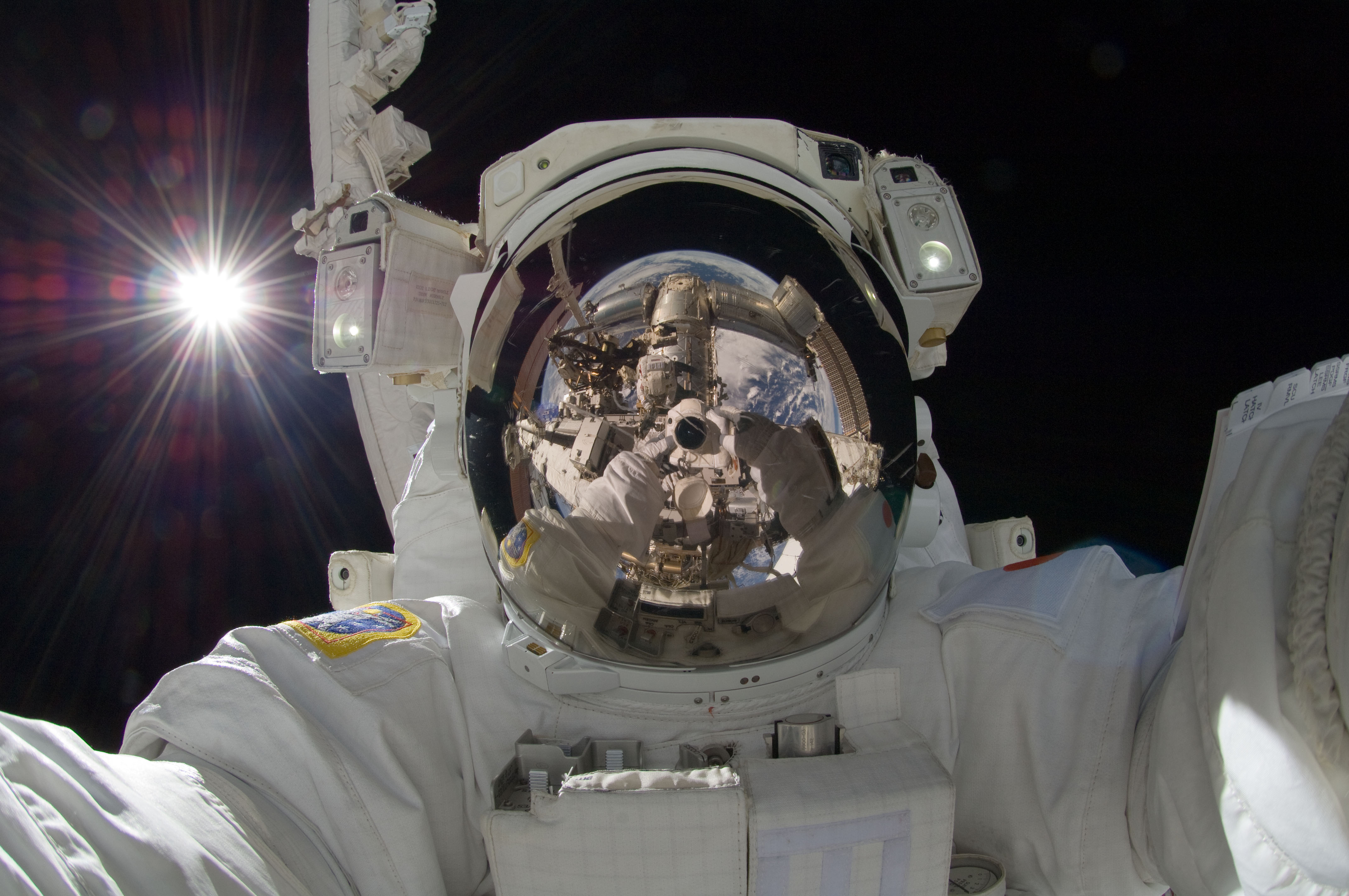
Visual representation, which may be the most modern form of self-representation by way of photography such as selfies, is quickly rising to the top ranks. Almost everyone with access to a smartphone has taken a selfie, some being more famous then others, such as Ellen DeGeneres’ selfie at the 2014 Oscars and Aki Hoshide’s selfie from outside of the International Space Station, which is in space. Before selfies, the drawn or painted self portrait reigned, such as the previously mentioned paintings of Frida Kahlo. Other artists to paint self portraits include Vincent Van Gogh, Pablo Picasso, Rembrandt, Claude Monet, Raphael, and Michelangelo.
While finding famous examples of quantitative self representation is difficult, personal examples are everywhere. Recording one’s weight is a form of quantitative self representation, as is numerical astrology (also known as numerology) and step recordings from fitbits.
As displayed throughout historical examples, self-representation is a quality of human nature. To understand oneself, one may try to see themselves from many perspectives, such as that which is written, drawn, or recorded. From the self portraits hanging in art galleries to the multitude of selfies on Instagram, humans seek not only to see themselves, but to see who they want to be.
 Marleigh and the Arts