The most recent posted picture on my Instagram account is of myself and my family after a particularly rousing game of “Settlers of Catan”. My Instagram story, meanwhile, has a photo of the cardamom, cinnamon, and almond grounds oats I made for breakfast this morning. The background of the Chromebook on which I write is the painting Circe (The Sorceress) by Pre-Raphaelite painter John William Waterhouse. The iPad next to me displays a piece of Steven Universe fan-art on the lock screen, and on it I am listening to Armenian duduk meditations. All the media that surrounds me has been personalized as much as it can be to reflect out who I am and who I want the world to see me as.
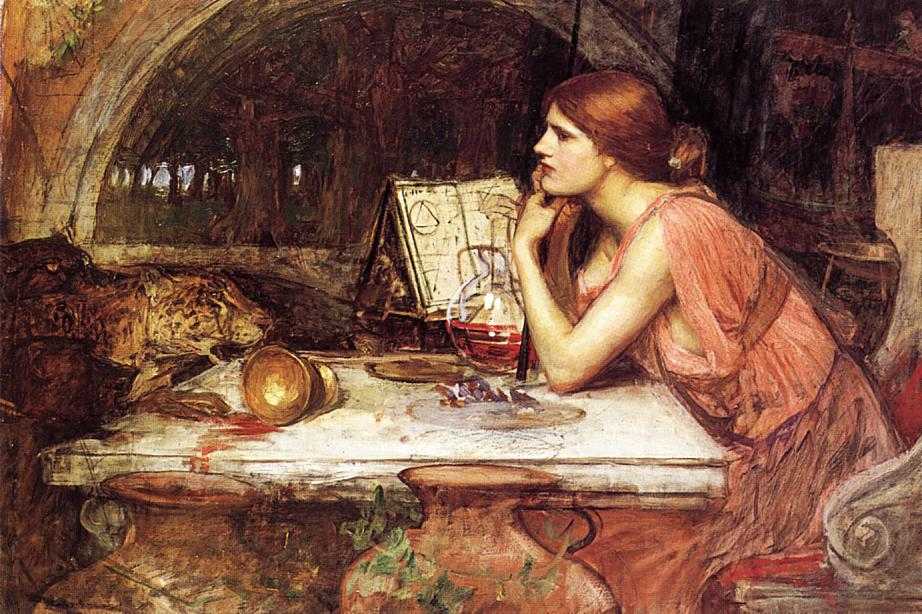
Circe (The Sorceress) by John WIlliam Waterhouse 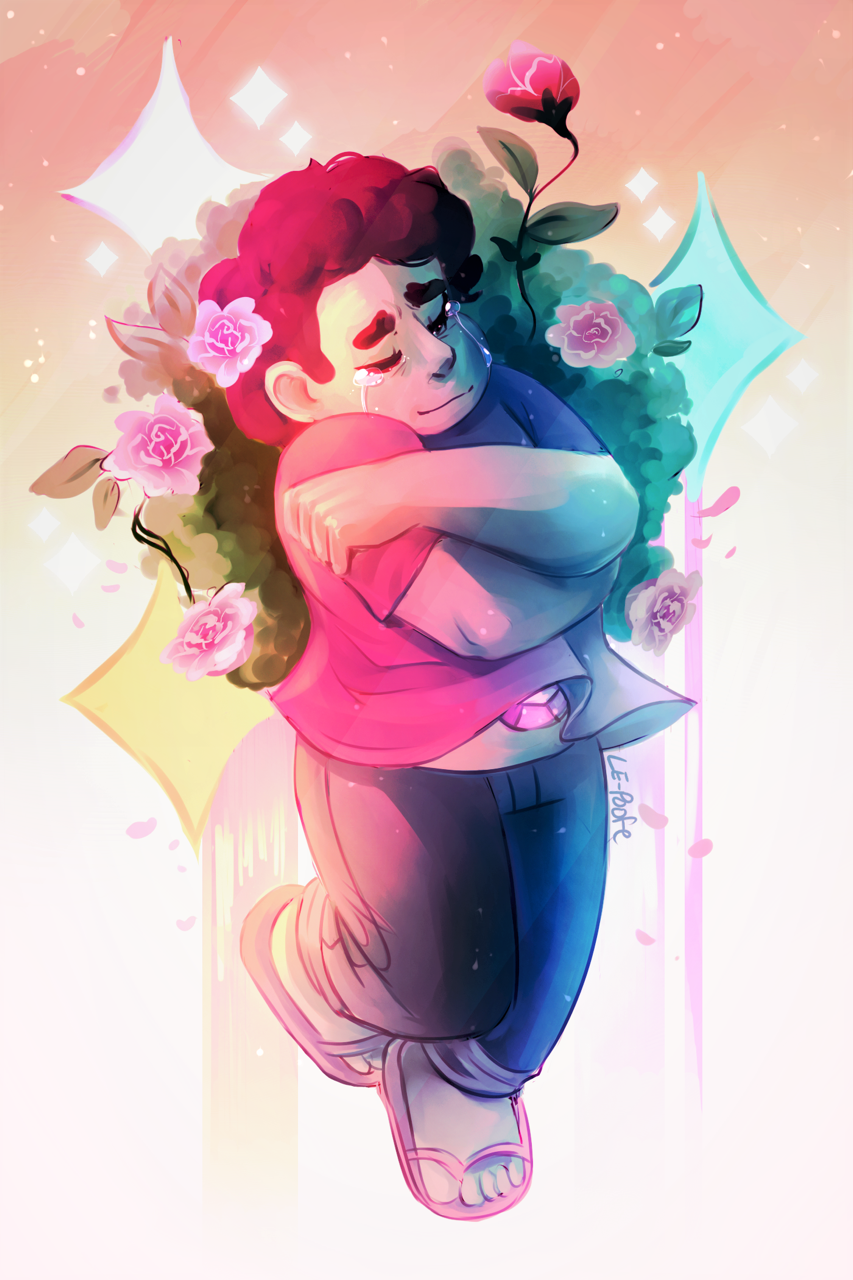
By Tumblr user “Le-Poofe”
Of course, while I generally try to reflect the more impressive parts of who I am and who I want to be, reality is multi-sided. While my current background is a sophisticated painting, the one before it was a still from an anime. Before the Armenian duduk meditation, I was listening to Disney songs and Ariana Grande mashups. Before my “Settlers of Catan” Instagram post is a death announcement. After my ‘Stellar Astronomy’ class yesterday, I had my weekly therapy session. I may have eaten almonds and cardamom for breakfast, but also in my belly is a handful of m&ms.
In Chapter 1 of her book “Seeing Ourselves Through Technology, Jill Walker Rettburg says “… many self-portraits (show) more fragmented versions of the self, tending to ‘conceal or suppress the face and head, thereby thwarting traditional physiognomic/phrenological readings’
(Hall 2013, chapter 10, para. 2).” (Rettburg). Just as portraits in art went from full torsos to fragmented images and selected views, social media accounts are regulated to show only select portions of the self. Indeed, it is not uncommon for Instagram users to have duel accounts: one account, usually public, is used to show a beautiful, sophisticated version of their lives. The other, known as a ‘Finsta” (an amalgam of ‘fake’ and ‘Insta(gram)’) is a private account used only to share silly, fun photos with close friends.
The carefully sculpted personas put out online are often a result of fear. Should a future employer or recruiter find you online, you would want them to see a nearly flawless personage of yourself. We carefully keep hidden what we could be made fun of for posting on the internet, such as certain ‘nerdy’ interests and pursuits. Time and time again we see warnings of peers and public figures who were not so careful curating their online presence. Sometimes, as in the case with antisemitic, racist, sexist, or otherwise bigoted photos or tweets, some backlash is deserved, and apologies necessary. Other times, as with interest in certain harmless TV shows or book series, it is merely being different that bring repercussion.
No matter what the reason, online presences are modeled as closely as one models who they are at home versus at school versus at work. It is the desire to be treated as one’s best self that propels acting as one’s “best” self, even if it just that: acting.
 Marleigh and the Arts